181 Days of Winter: Overwintering in Greenland
March 02, 2026
5 min read
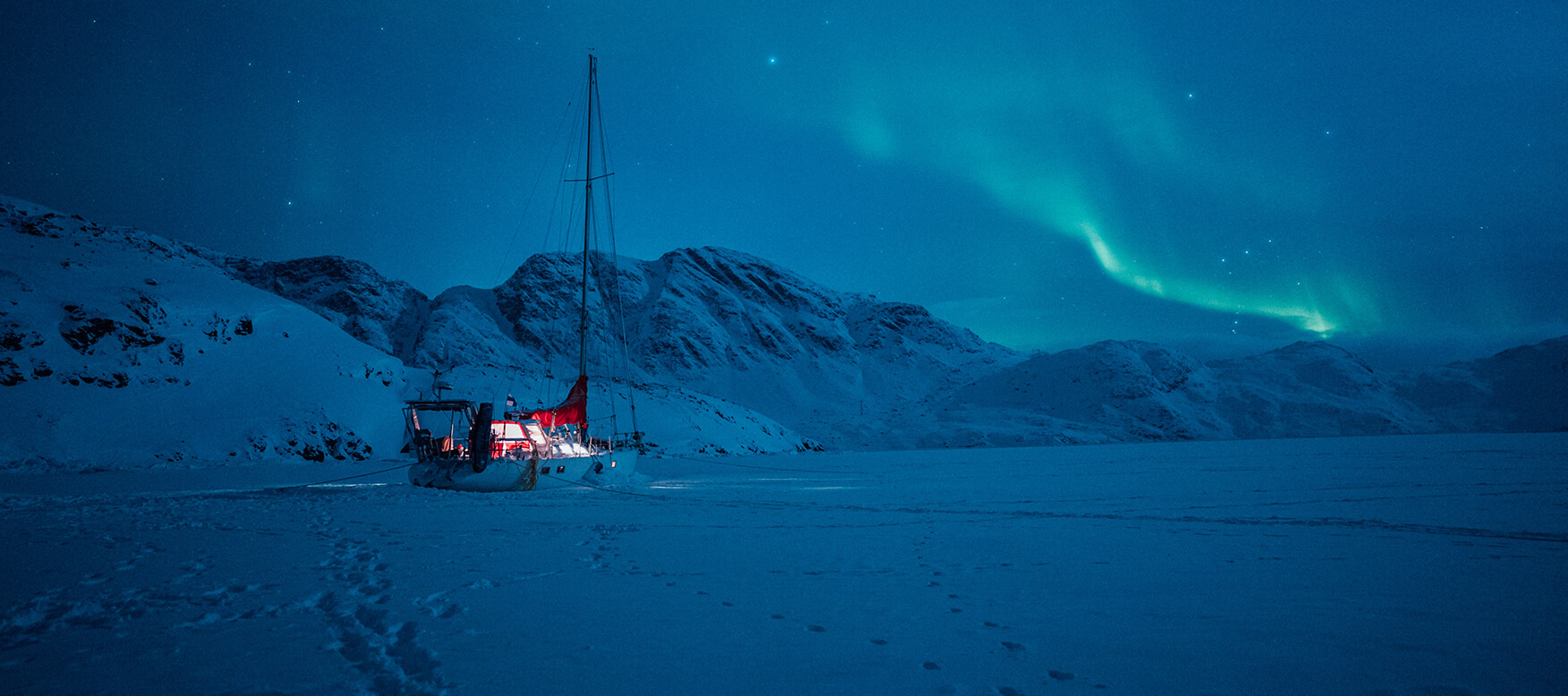
For 181 days, our sailboat was locked solid in the ice of West Greenland. Just us, our Greenland dog Nova, and a whole lot of frozen ocean.
Text by Juho Karhu & Sohvi Kangasluoma / Photos by Juho Karhu and Mikko-Pekka Karlin
What Does "Overwintering" Even Mean?
Overwintering is exactly what it sounds like: letting your boat freeze in and deliberately staying through an Arctic winter instead of doing the sensible thing and heading south before freeze-up.
After sailing the Northwest Passage from Alaska to Greenland we made it to Greenland. Or more correctly, Kalaallit Nunaat, the land of the Greenlandic Inuit. Here we’d stay for the whole winter; but first we’d have to find a suitable location.
Near Disaster
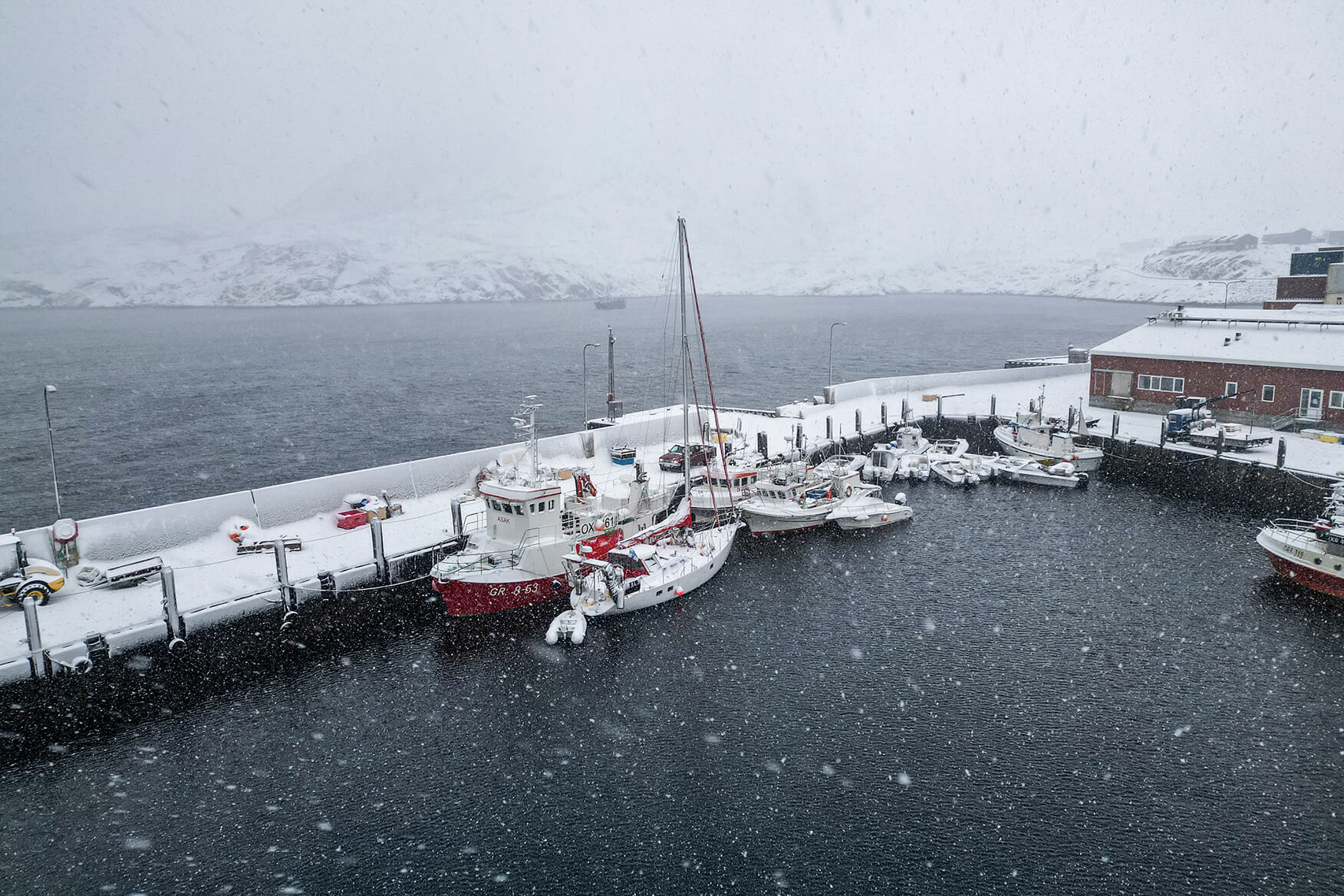
Initially we chose a fjord about 40 nautical miles from Sisimiut, on the west coast of Greenland. Far enough to feel properly alone, close enough that if something went really wrong, help was theoretically possible.
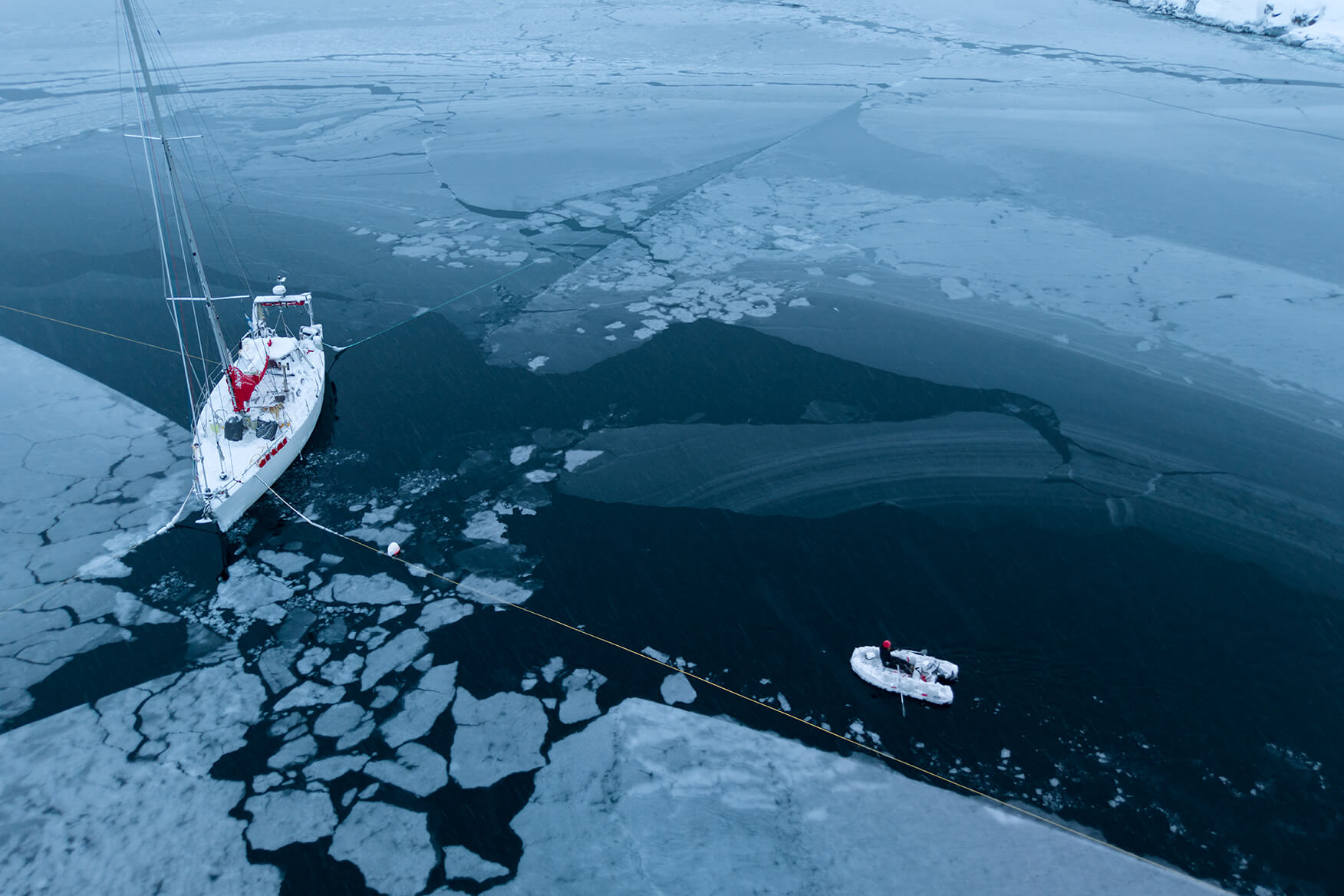
But pushing into the bay in November we soon found out that we’d arrived too late. As we tried to make our way to our planned spot deeper in the fjord, the ice was already too thick. Slushy ice was constantly blocking our engine's cooling system, and even worse, the banging sound of Lumi's hull hitting ice was brutal. We were worried about the rudder, the propeller, everything.
We gave up partway in and had to settle for a spot that wasn’t our first choice. And we quickly found that to be a mistake.
The ice quickly settled around us, but three days after we froze in, a massive storm hit. The temperature jumped up ten degrees overnight. The ice we were frozen into started moving, and we started moving with it.
At 2 a.m. the ice had released us and we were drifting together with football-field sized floes of ice. If the wind changed, we'd be crushed. We fired up the engine and slalomed our way through the ice to open water, with the full moon luckily lighting up the landscape, and then sailed back to Sisimiut to regroup.
Second Try
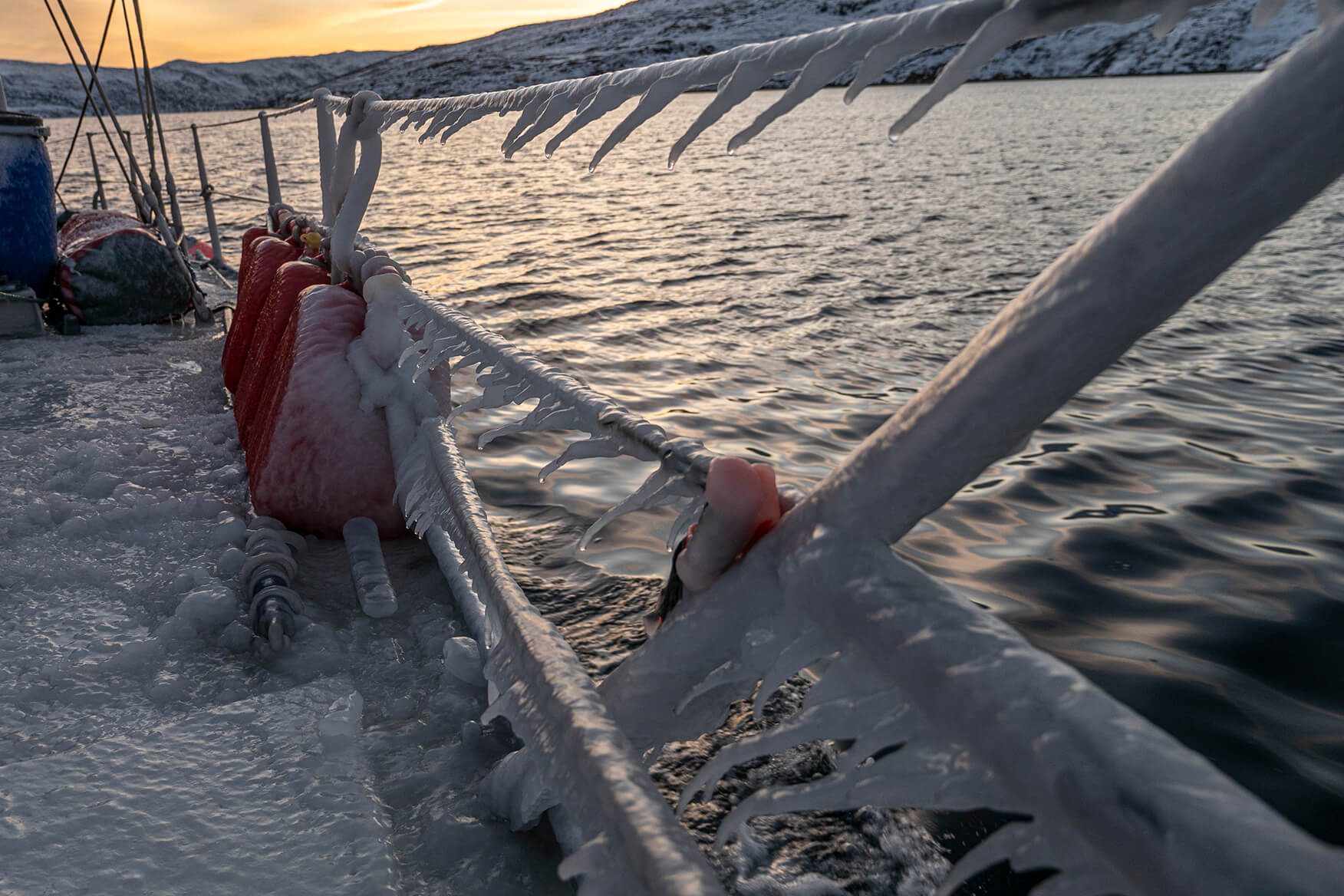
A few weeks later, we went in for a new try at a new location. This time the bay was a bit more protected and just slightly closer to Sisimiut.
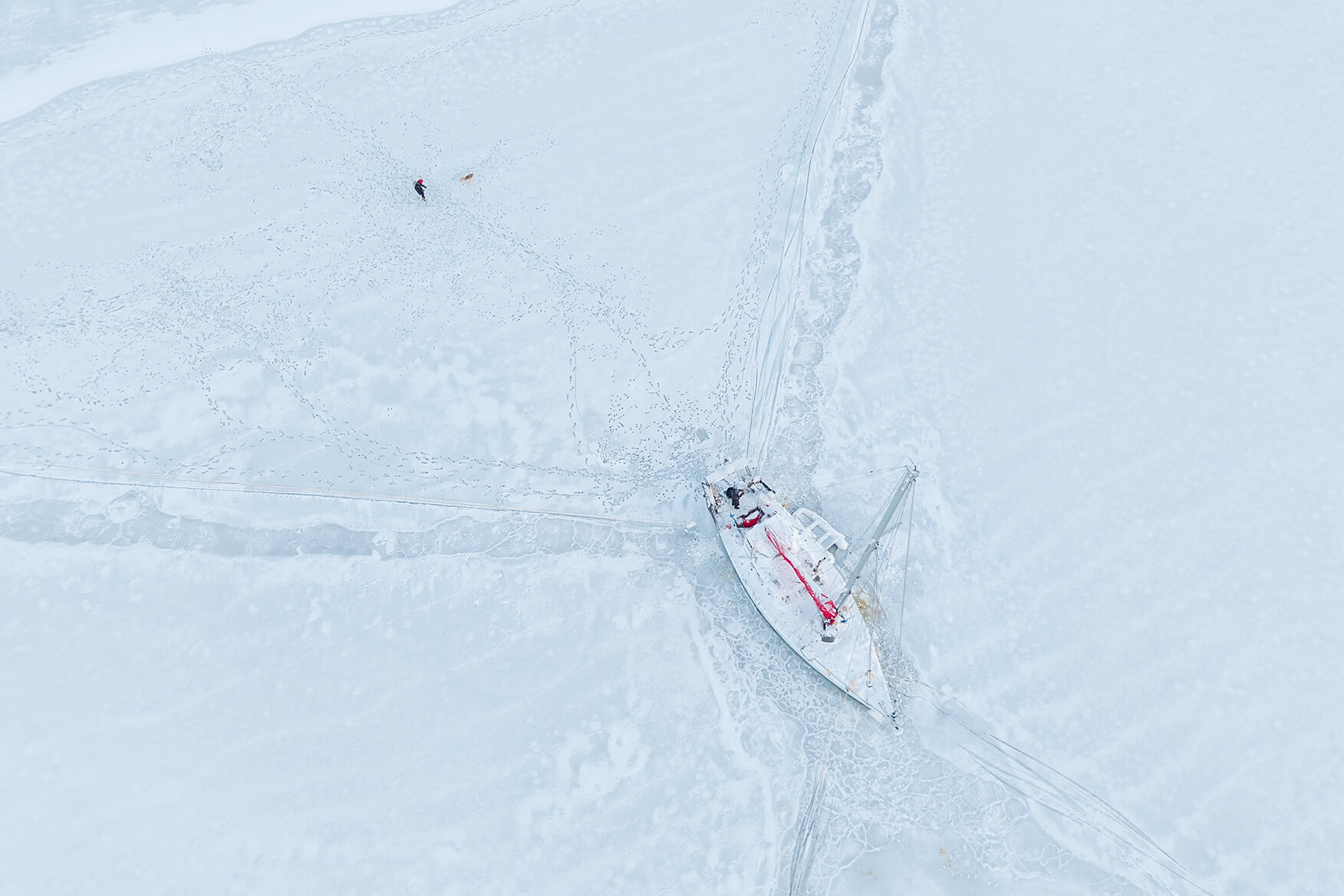
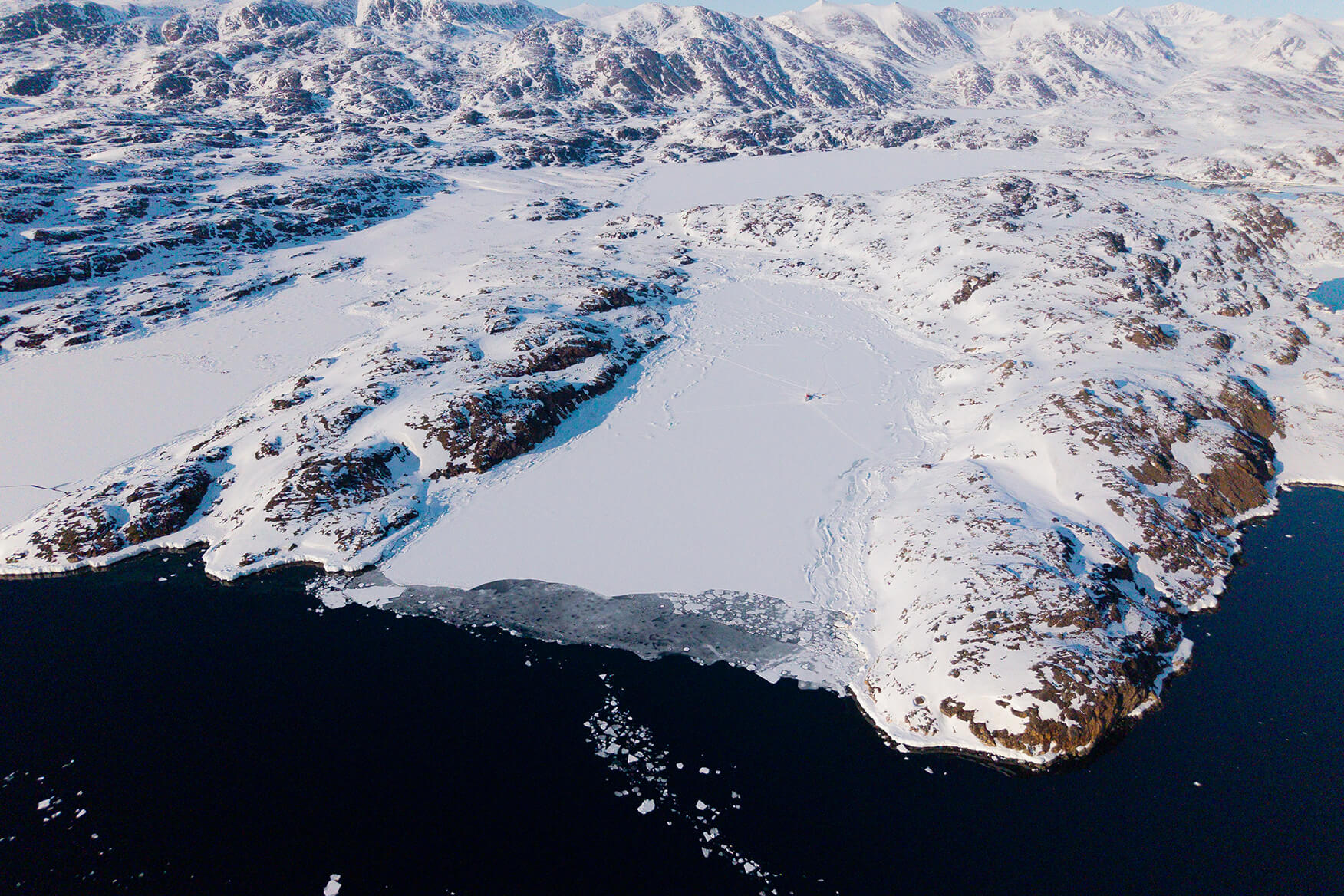
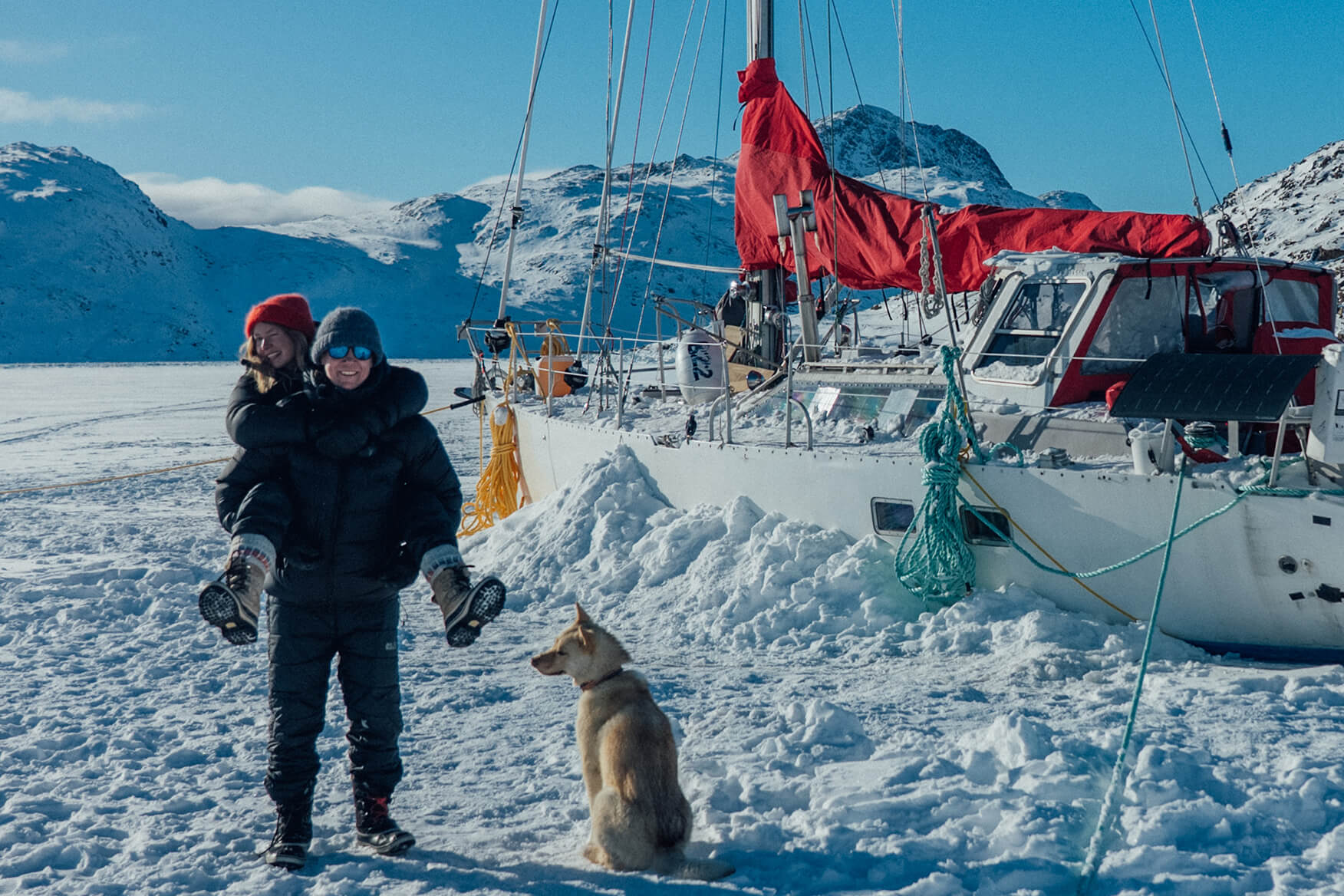
This time we got it right. The bay was still unfrozen and we managed to set our landlines to tie our boat in. We set up our emergency depot on shore (just in case something unexpected happened), and let winter tighten its grip around us.
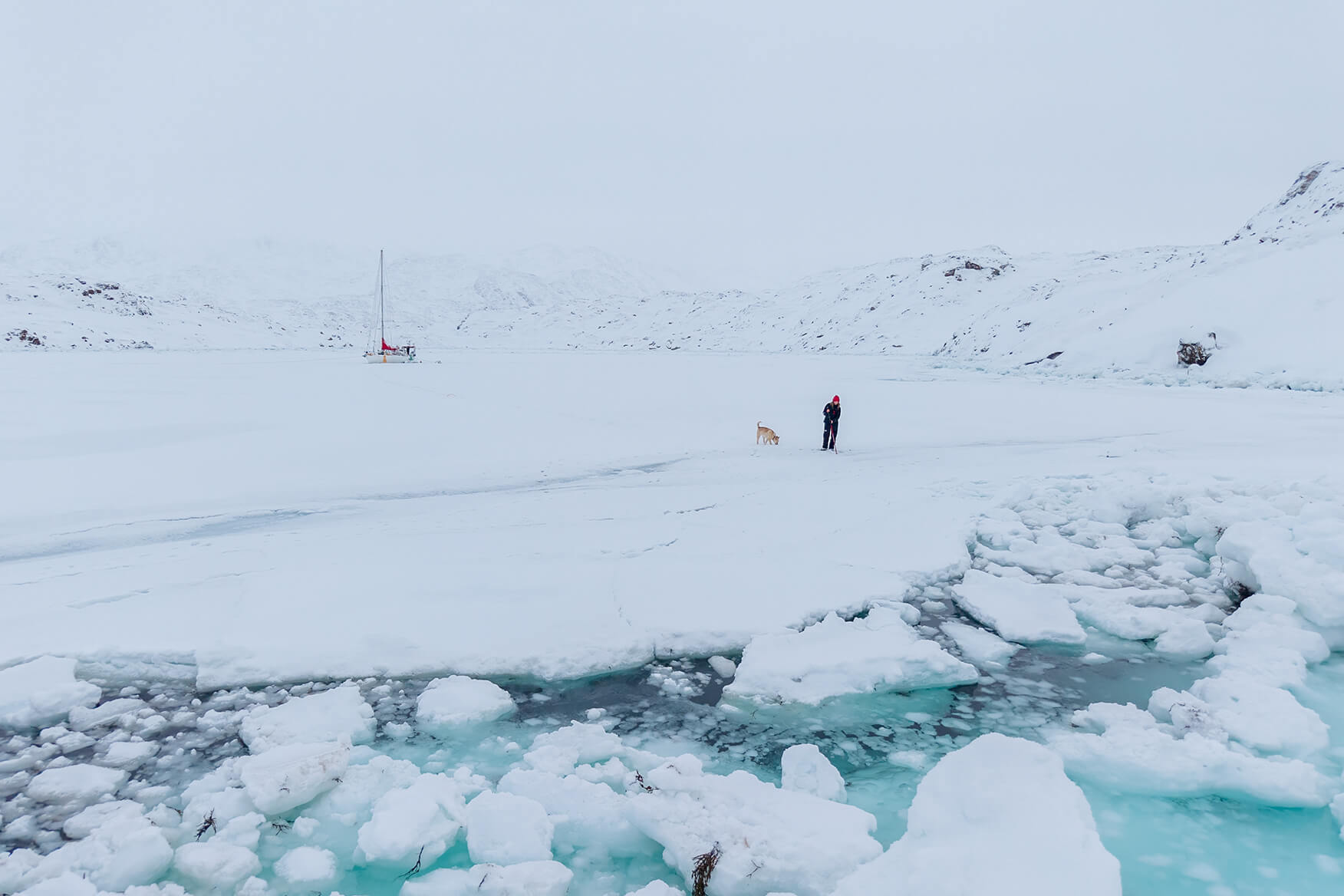
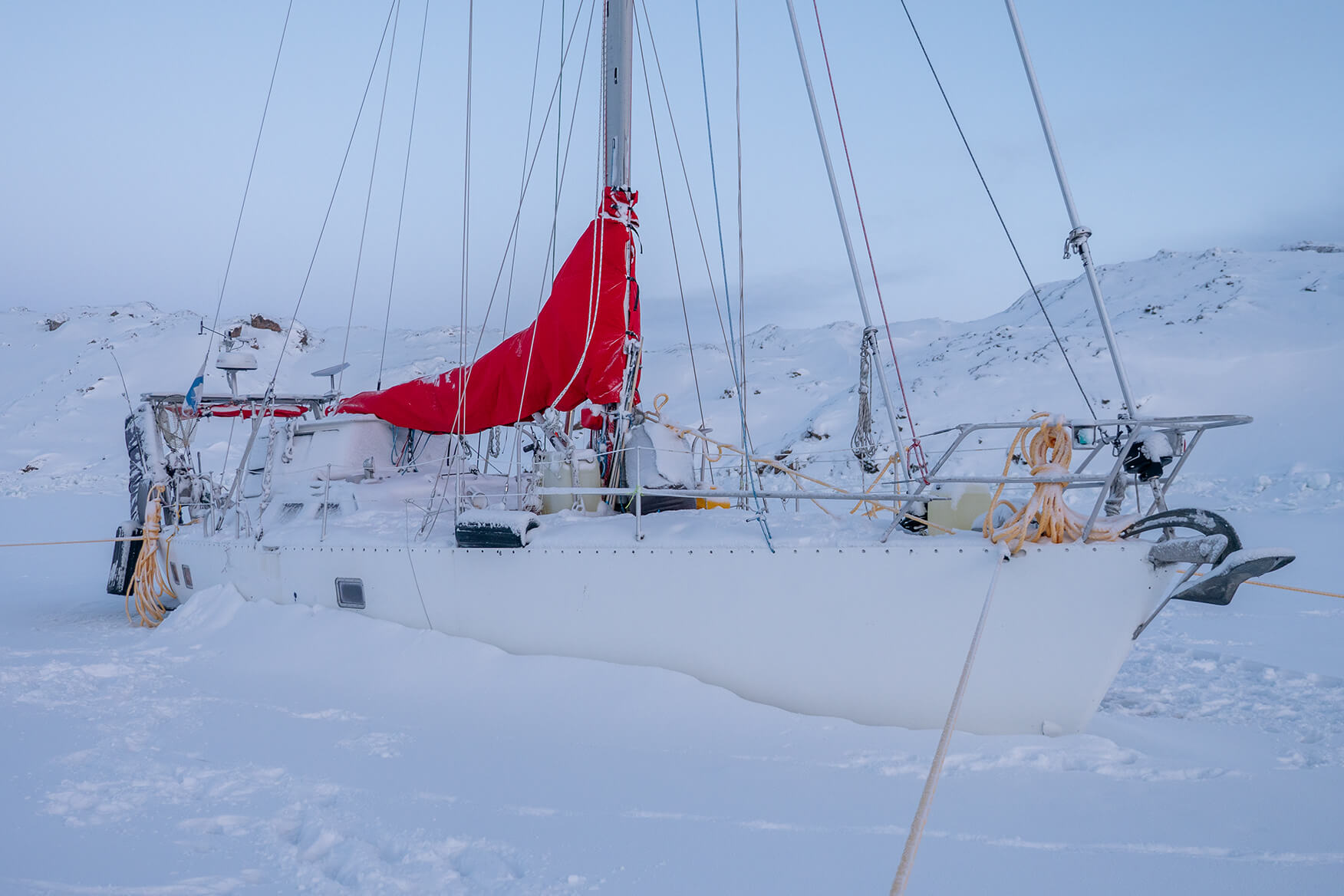
The fjord froze. Slowly, almost imperceptibly at first, ice formed around the boat. One morning we woke up and realized we weren't floating anymore. The ice was thick enough to walk on.
Life Gets Small
After the ice froze solid we actually felt safe and started our daily routine. We melted snow for water, experimented with baking bread (we still aren’t good at that) and read a great amount of books.
Everyone asks about cabin fever, but we never felt trapped. It's easy for us to give each other space even in the tight quarters of the boat, because we luckily have completely different sleep schedules. Sohvi has a few hours of “me time” each morning, while Juho has his each night.
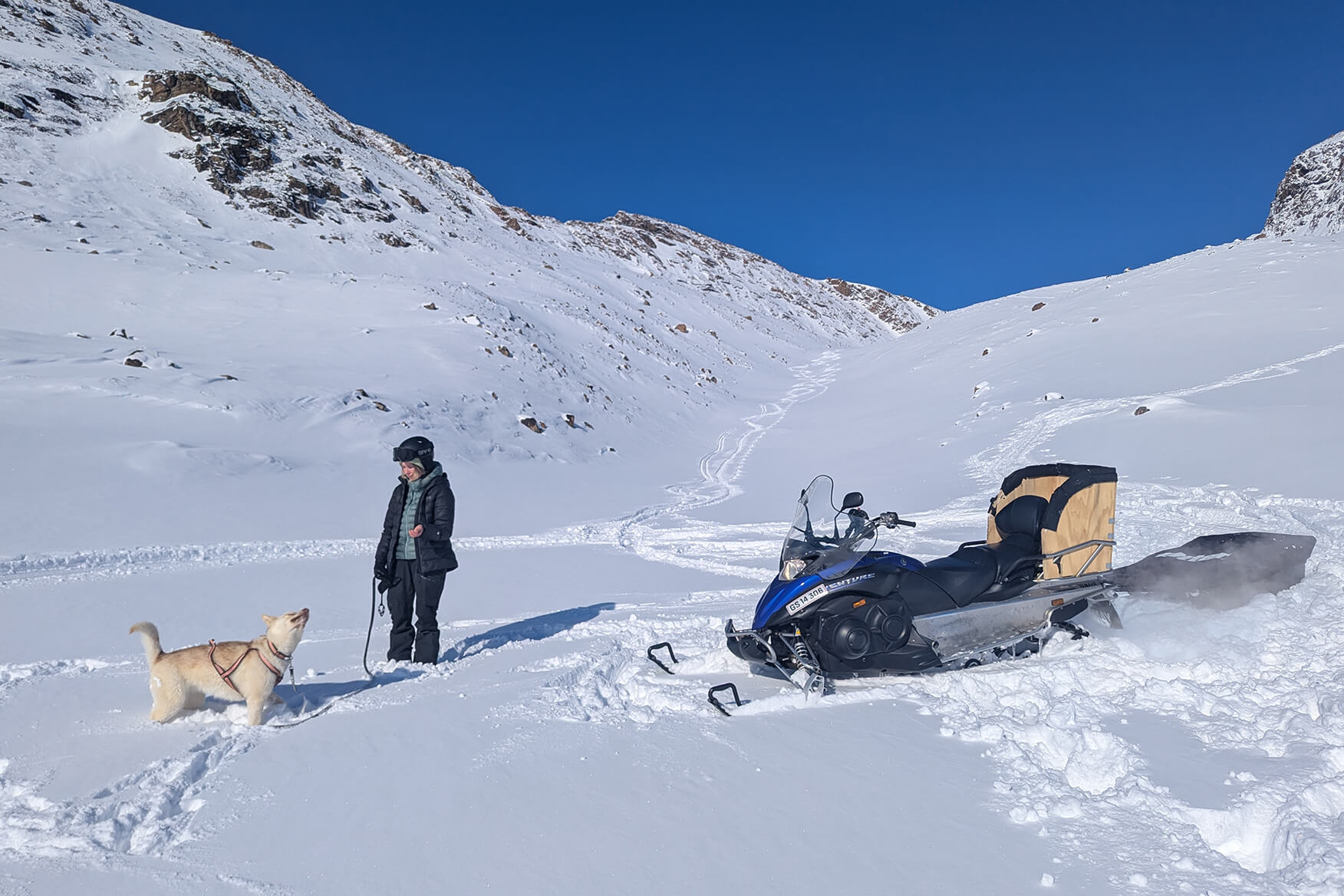
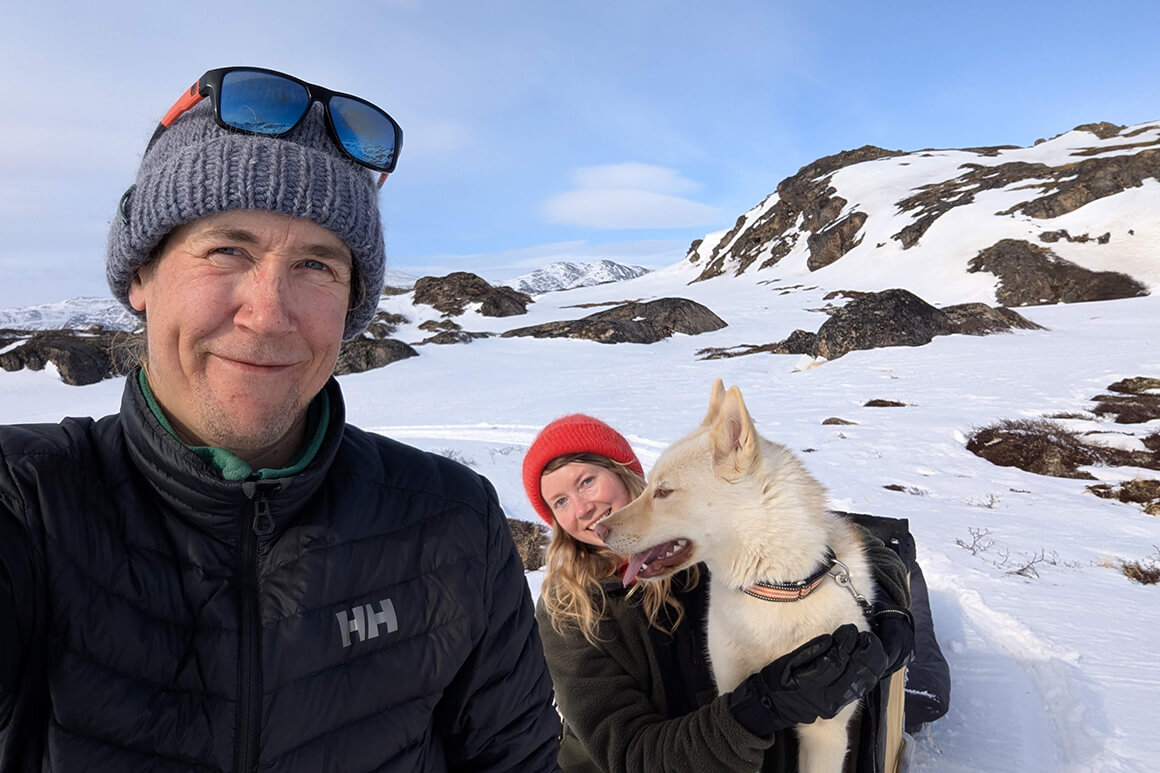
We went for daily walks with our newly adopted Greenland dog Nova, who we’d picked up in Sisimiut. She was completely in her element, but we didn’t plan for her to be just company. Nova was also supposed to be our early warning system for polar bears. But we soon learned that she preferred to sleep inside the boat at our feet, rather than out on the sea ice.
The Ice Isn't Quiet
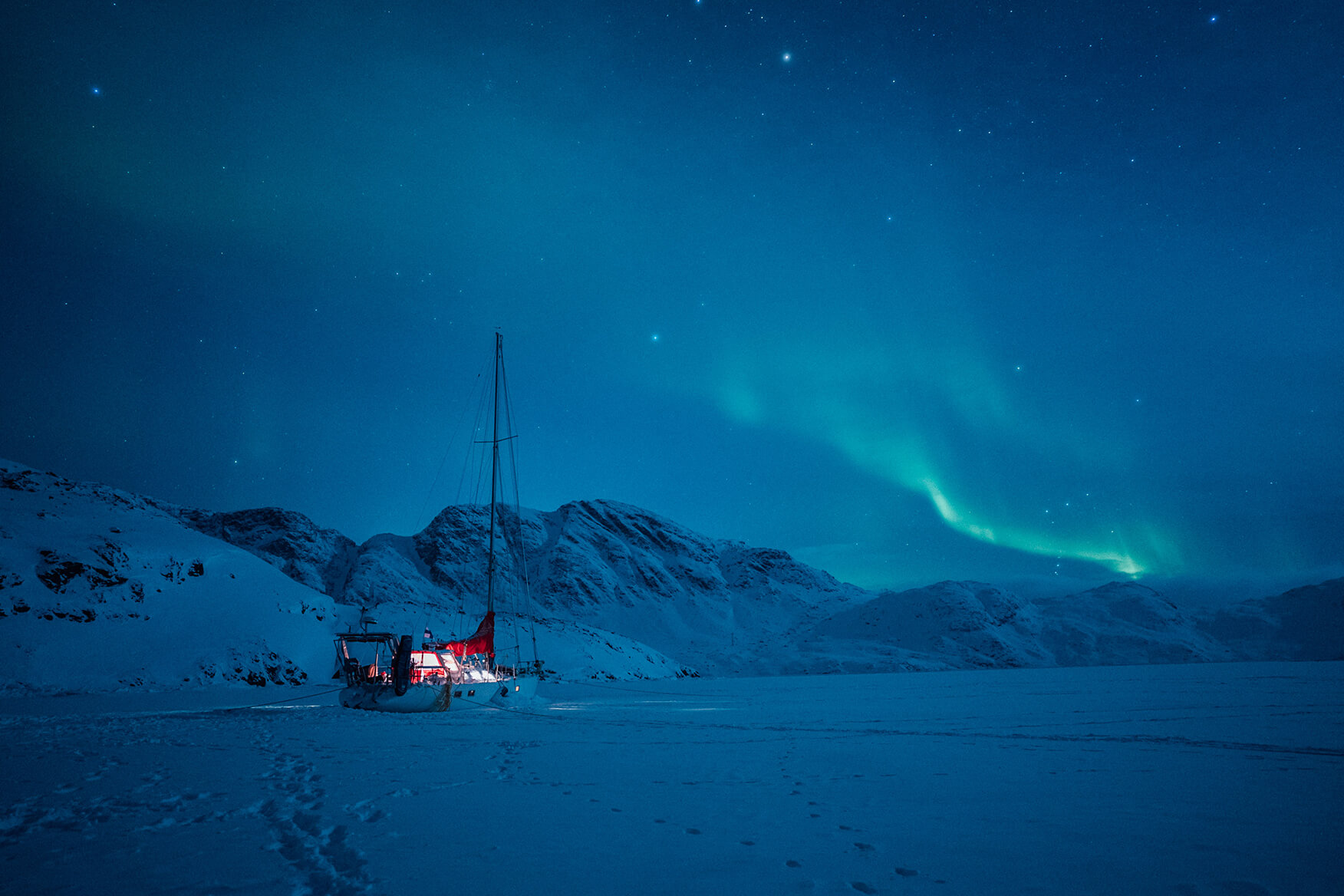
The ice doesn't stay quiet. It changes every single day. It moves with the tides, up and down, about every six hours. In our small bay pressure ridges built up and collapse and cracks shot accross the fjord.
Static ice is not too dangerous, but moving ice can easily damage a boat’s hull, and that was of course our biggest fear. The Kalaallit have travelled on the sea ice (on snowmobiles, dogsleds and on foot) and around it (on kayaks and boats) for generations and understand ice in ways we could never learn from a book. Where do the winds blow from when the ice breaks up in the spring? Which bays freeze first and melt last? These were some of the questions that we had in mind and talked about with the people of Sisimiut before committing to our location.
The Sun Returns & the Ice Breaks Up
After the polar night we saw the sun again on Valentine's Day. It had returned to our latitude earlier, but the steep mountains on the other side of the fjord had kept its rays from us.
We didn’t really feel like we had suffered from the darkness. We loved cozying up inside the boat and spending long evenings drinking hot chocolate. But when the sun came back we realized how much we'd missed it. The gentle warmth felt incredible and now our solar panels were back to producing electricity as well.
When the ice started breaking up we actually felt reluctant. We knew it’d soon be time to leave and our time in the ice had felt like home. All winter we'd been in our own bubble, and except for the chatter provided by our satellite Internet connection, we’d mostly been disconnected from the world's realities.
We had prepared well; enough food, diesel and spare parts to last us 7 months. We hadn’t been living in deprivation, but by the end we were down to basics: pasta, canned tuna, tomato sauce, canned fruit, and whatever fish we could catch when ice fishing.
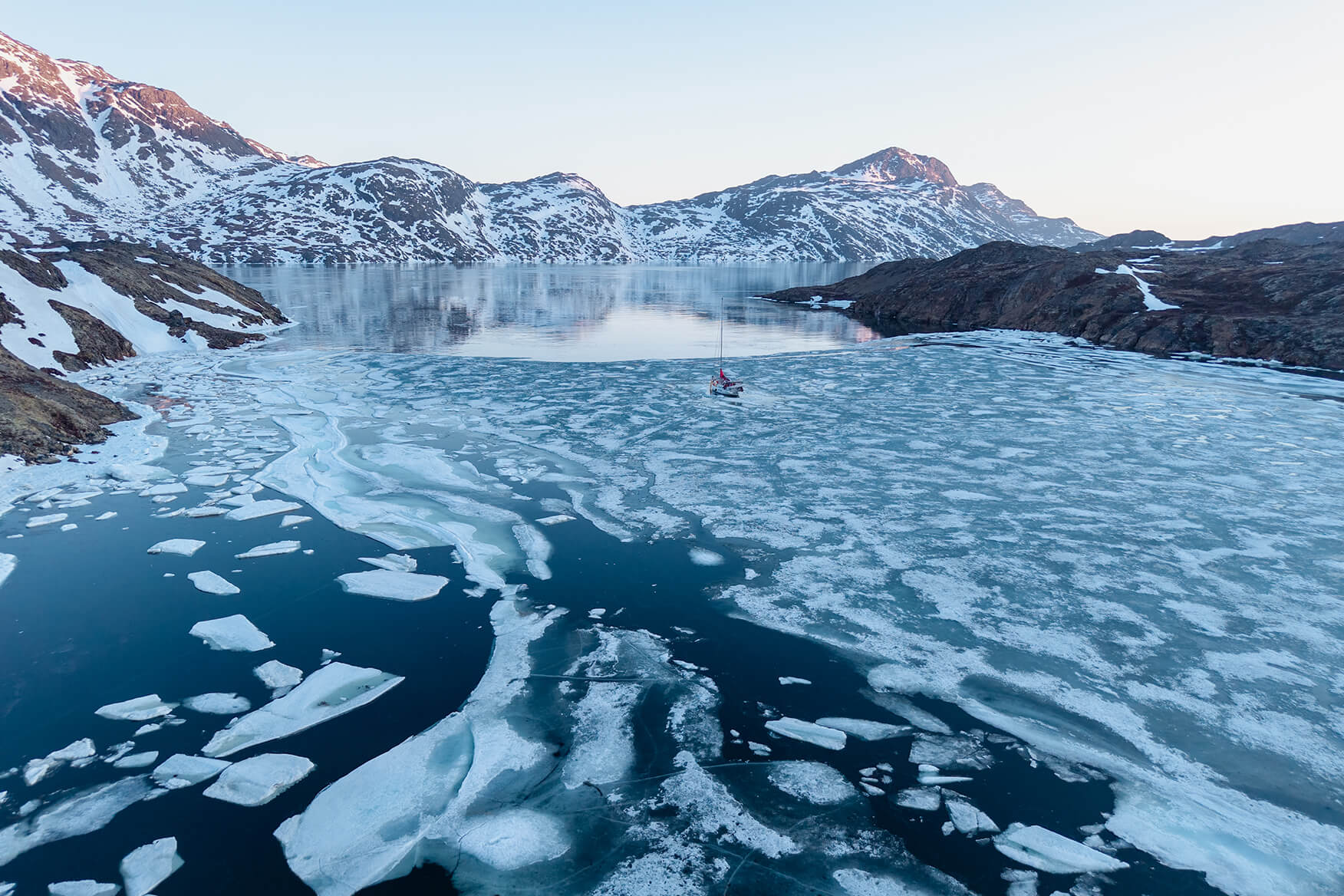
As spring progressed, a dark crack appeared at the ice edge. The next day it had disappeared and the ice edge's shape had changed: a huge section of ice had vanished. The open water kept creeping closer, and at the beginning of June 2025, after 181 days in our bay, our boat Lumi was finally floating free again.
The Essential Equipment
In an environment like this we don’t consider clothing to be just for comfort or function. It's essential safety equipment that needs to keep us warm and dry.
We lived in layers all winter:
- Moisture-wicking HH Lifa Merino base layer to keep skin dry.
- Insulating middle layers (HH Lifa Merino midlayer, pile fleece or Verglas light insulator) to trap warmth.
- Windproof, waterproof shells to block the wind. We used the Odin backcountry series pants and jackets.
Interested in exploring the gear that kept us alive?
Gear worn by Sohvi and Juho:
- Odin Series shell jackets and pants for backcountry skiing and days on ice
- Verglas Insulator jackets and Polar Down jackets for the cold & dry days
- Aegir Ocean series jackets and pants for the Arctic sailing conditions
The Authors
Juho Karhu
Juho is a Finnish Arctic sailor and filmmaker. He documents the life aboard s/v Lumi and his Youtube productions and documentary collaborations have reached millions of people.
Sohvi Kangasluoma
Sohvi is a Finnish researcher and writer focused on Arctic environments. She’s currently a Postdoctoral Researcher at the Arctic Centre, University of Lapland. Dr Sohvi’s research explores human-nature relations in the North and how ice actively shapes life there.
Explore more blogs
May 05, 2026 3 min read
Skagen – An Iconic Race and a Collection to Match
Discover the history of the Skagen Offshore Race and explore Helly Hansen's Skagen Collection, built with decades of insights from working with professional sailors.
May 05, 2026 3 min read
Around the World in 40 Days, Thomas Coville Breaks Records
In just 40 days, 10 hours, 45 minutes, and 50 seconds, Helly Hansen’s ambassador Thomas Coville and the Sodebo Ultim 3 crew set a new nonstop around‑the‑world sailing record. Here’s how we supported the team through the most extreme conditions on the planet.